
What we make
Device housings and covers, fluid-path and connector parts, diagnostic disposables, precision components for instruments, and packaging components for medical products.
Industries
We are toolmakers first, so we are usually called for the parts that punish a weak mold: thin walls, optical surfaces, internal threads, soft-touch over-molds and fits measured in hundredths of a millimetre. Here is what we build, and what makes each industry difficult.
CENTS builds and runs injection molds for six industries: cosmetics packaging (lipstick tubes, inner tubes, caps and closures), medical devices (housings, fluid-path components and disposables), toys and juvenile products, precision mechanical parts (gears, housings, functional components), consumer goods and houseware, and electronics and appliance parts. Tooling for cosmetics, toys and mechanical parts has been a core business for more than two decades; medical work is handled with documented dimensional reporting and material traceability.
01 — Cosmetics packaging
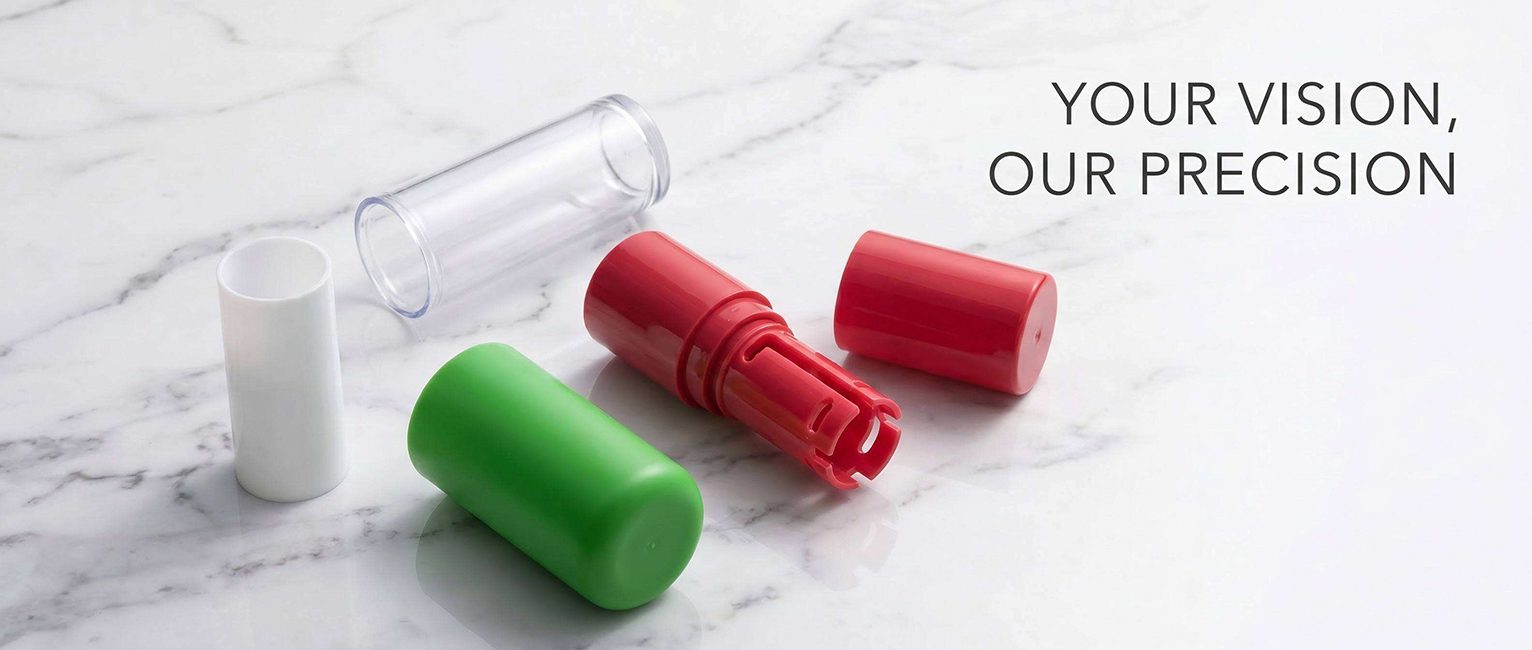
For more than 15 years we have molded lipstick tubes and cosmetic inner tubes for a well-known European cosmetics brand. The tools required a 1,000,000-shot life; the versions we built have been validated at 5,000,000 shots.
Three requirements collide in one part. The surface must be Class-A — any flow mark, weld line or polishing scratch is a defect you can see from a metre away. The thread and fit must be perfect over millions of open/close cycles. And the wall is often under 1 mm, which leaves little room for error in gating, cooling and shrinkage.
Our answer is conventional engineering, applied strictly: mirror-polished NAK80 or S136 cavities, symmetric cooling, valve-gate or hot-tip gating positioned away from cosmetic surfaces, and dimensional verification of the assembled tube rather than the individual parts only.
02 — Medical devices
Housings, device enclosures, fluid-path components and single-use parts where dimensional evidence and consistency outrank unit price.
Device housings and covers, fluid-path and connector parts, diagnostic disposables, precision components for instruments, and packaging components for medical products.
Documented dimensional reports, material certificates and batch traceability, stable process parameters and an anti-dust molding area for parts that need a protected environment.
Tell us the documentation format your quality department requires — first-article inspection, part submission files, resin declarations — at the RFQ stage, and we confirm in writing what we can deliver before you commit tooling budget.
Boundary: CENTS is a mold maker and molder, not a certified medical device manufacturer. Where a project needs cleanroom class certification or a specific regulatory registration, be explicit at the RFQ stage — we will confirm exactly what our plant provides and what must be handled by your own quality and regulatory process.
03 — Toys & juvenile products
Toy molding has been part of our business for more than 20 years — multi-part assemblies, hard-soft combinations, bright cosmetic finishes and high cavitation.
Several parts of one product in a single mold, so a low-volume toy set can still be economical to produce.
Over-molded grips, wheels and soft parts with engineered bonding geometry and controlled wall thickness.
Designed-in snap hooks and press fits, with our assembly workshop handling final assembly and packing.
Tooling that holds the dimensional consistency your safety testing samples depend on, run after run.
Certification note for toy projects: toy safety testing (EN 71, ASTM F963, CPSIA) is performed by accredited third-party laboratories on your product. We support it by keeping materials documented and dimensions repeatable — and we will tell you clearly which documents we can and cannot issue.
04 — Precision mechanical parts
Gears, housings, brackets, bushings, slides and mechanical components where the mold determines whether the assembly works.
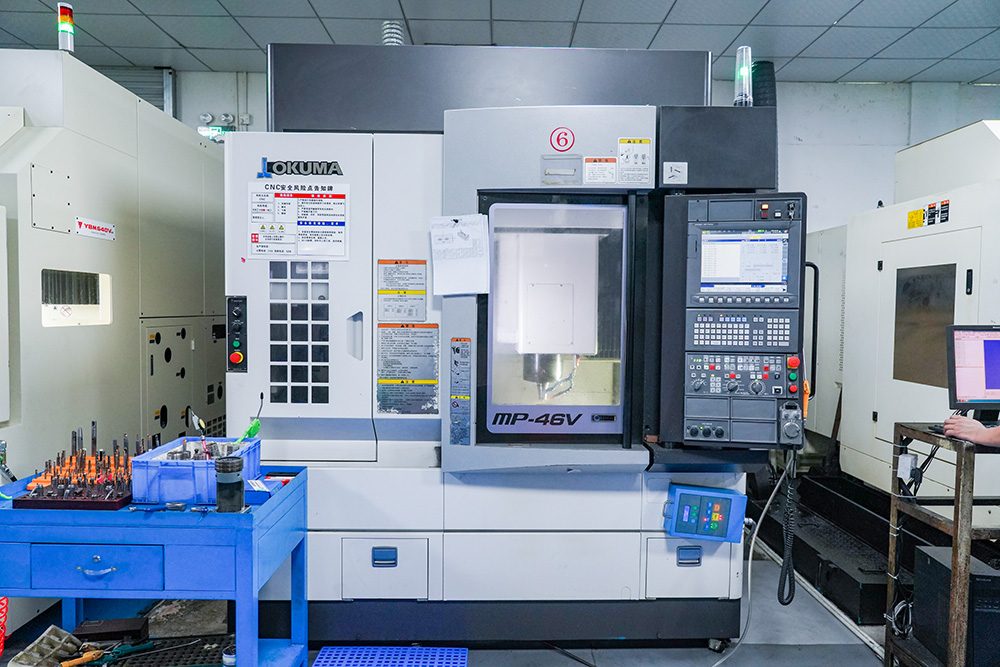
Mold work is held to ±0.01 mm on our milling, wire-cut and EDM machines, and verified on a Swiss Hexagon CMM at 0.001 mm accuracy. Steel dimensions are corrected for the specific shrinkage of your resin grade, and where a fit is critical we agree the tolerance stack with you before design approval instead of discovering it at trial.
On molded parts, ±0.05 mm is a realistic general tolerance for a well-designed part, with critical dimensions achievable at ±0.02 mm. Anything finer depends on resin, geometry and cavity count — and we will say so before you design an assembly around it.
05 & 06 — Consumer, houseware, electronics
Volume products where cost per part, appearance and delivery stability decide the project.
Enclosures, bezels, buttons, covers, internal frames and appliance components — including flame-retardant and UV-stable grades, textured surfaces and printed or laser-marked decoration.
Kitchen and household products, containers, lids and lids with seals, storage and organisation products, and promotional items — often with demanding cosmetic surfaces and low unit cost targets.
Technical packaging, protective components, caps and closures, industrial parts and jigs — where the mold must run reliably for years on a press you may not even own.